Best Solar Security Cameras 2026 (No Wiring, No Subscription)
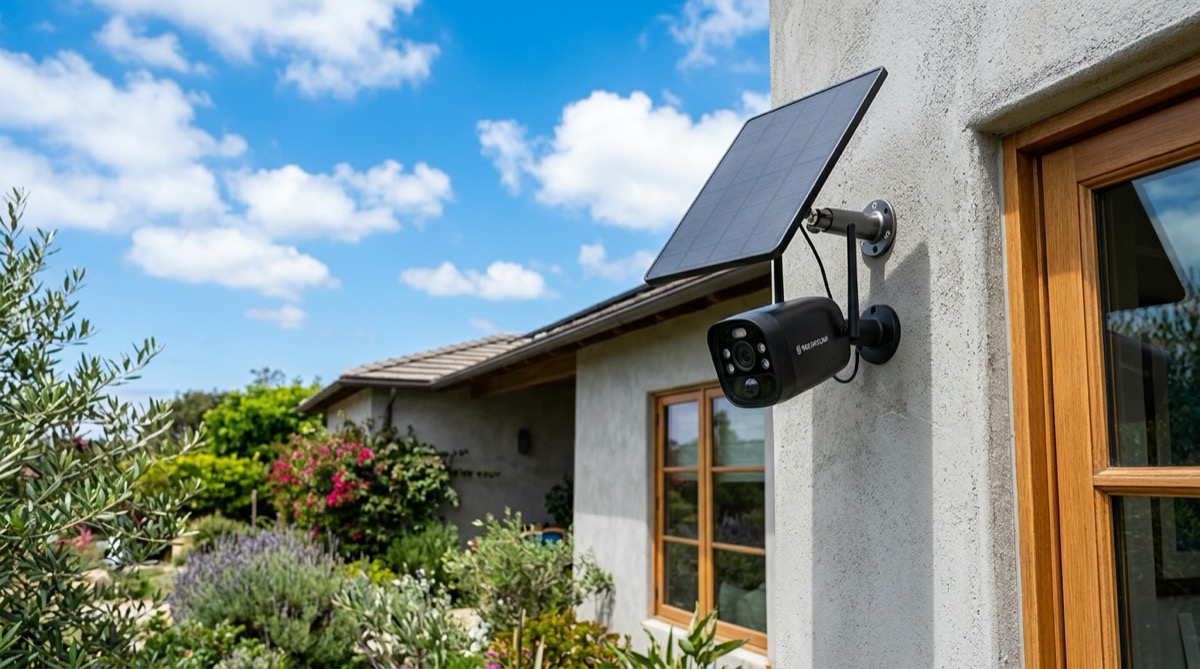
A solar wireless camera recharges itself from the sun: no cable, install it anywhere. Look for a model with IP66/67, a large battery (10,000 mAh+), and mount the panel facing south. Our 2026 picks: Eufy SoloCam S340 (best overall, built-in panel + dual lens), Reolink Argus 4 Pro (4K wide view) and Tapo C410 Kit (best value). Details below.
In this guide
Why go solar — and its limits
A solar camera pairs a battery with a small photovoltaic panel: the panel tops up the battery through the day, so you have no power cable to run and no battery to recharge by hand. Ideal for a shed, a fence, a gate far from an outlet, or a rental where you don't want to drill permanently.
Two honest caveats:
- Charging slows in winter: short days, low sun, panels sometimes covered in snow. A big battery compensates, but a top-up may be needed.
- Cold cuts capacity (up to -50% in deep cold). Pick a model with a generous battery — see our cold-weather guide.
What actually matters
- IP66/67 weatherproofing — essential outdoors.
- Battery 10,000 mAh+ to ride out cloudy spells.
- Panel included (built-in or bundled) — some are sold separately.
- Local storage (microSD or station) to skip the subscription.
- 2K minimum and color night vision.
Our 2026 solar picks
Three models that meet the criteria, most complete to most affordable. Prices indicative on Amazon.
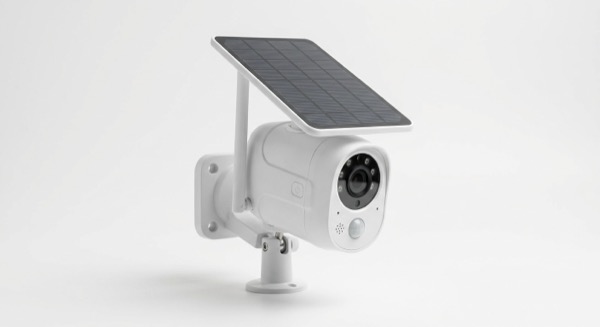
Eufy SoloCam S340
Built-in panel3K dual-lensPan/Tilt 360°IP678 GB local
The solar benchmark: integrated panel, dual-lens 3K (wide + tele) with 360° motion tracking, 8 GB local storage and no subscription. Strong runtime and a big battery that handles cold well. The best complete balance.
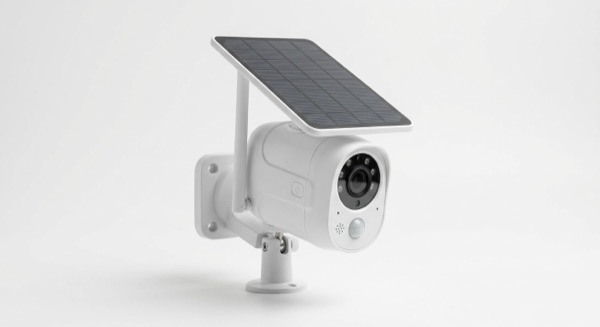
Reolink Argus 4 Pro (+ solar panel)
4K 8 MP180° panoramicColor nightIP66microSD
Dual-lens 4K stitched into a 180° panoramic view with no blind spot, excellent color night vision, optional solar panel. The best image quality in our solar selection — great for a large yard or façade.
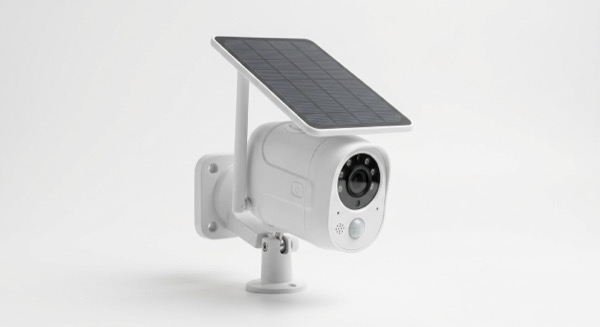
TP-Link Tapo C410 Kit (solar)
2K QHDPanel includedIP65microSDColor night
The best entry-level solar deal: 2K camera bundled with its panel, long-life battery, local microSD storage. Flexible install almost anywhere with no cable. Excellent value to start.
Comparison table
| Model | Resolution | Highlight | IP | Price |
|---|---|---|---|---|
| Eufy SoloCam S340 | 3K | Built-in panel + 360° | IP67 | $130–170 |
| Reolink Argus 4 Pro | 4K | 180° panoramic | IP66 | $150–190 |
| Tapo C410 Kit | 2K | Panel included, cheap | IP65 | $65–90 |
Indicative Amazon prices at time of writing (May 2026). Always check the model listing.
Installing for good charging
- Panel facing south, free of shade, to capture the most sun.
- Tilt the panel so snow and debris slide off.
- Shelter the lens lightly while keeping the panel in the sun.
- Watch the battery in the app during winter and top up if needed.
- Mind privacy — aim at your own property.
The right pick depends on cold exposure and whether you can run a cable. Our buying guide settles it in five minutes.
Read the buying guideFrequently asked questions
Do solar security cameras work in winter?
Yes, with caveats. Short days and low sun slow charging, and cold reduces battery capacity. Choose a model with a large battery (10,000 mAh+), face the panel south, and expect an occasional top-up in the darkest weeks.
Do solar cameras need direct sunlight?
A few hours of light per day is enough for most models, but more direct sun is better, especially in winter. Aim the panel south, free of shade, slightly tilted so snow slides off.
Solar or wired for outdoors?
Solar wins when you can't run a cable (shed, fence, far gate). Wired is more reliable year-round with no battery to recharge. Solar is an excellent complement, wired the safe bet.