Security Camera Buying Guide 2026: Wired vs Wireless vs Solar
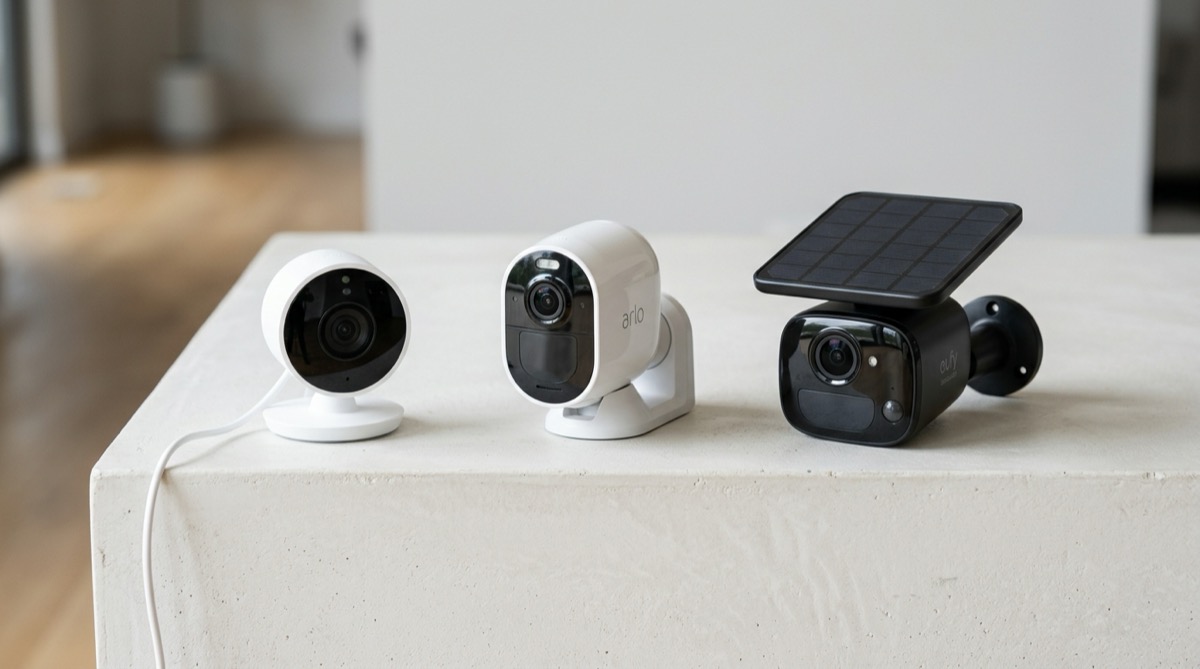
Answer three questions in order: (1) Can you run a cable? Yes → wired (most reliable, best in winter). No → wireless. (2) Is there sun? Yes → solar (no recharging). No → battery. (3) Outdoors in a cold climate? Require -30 °C, IP66/67, 2K minimum and local storage to skip the subscription. Everything else (AI, 4K) is bonus. The full method is below.
In this guide
1. Power: wired, battery or solar
This is the first choice — it drives install and reliability.
| Type | Pros | Cons | Best for |
|---|---|---|---|
| Wired (PoE / mains) | Constant power, continuous recording, no battery | Cabling required | Serious surveillance, winter, long term |
| Wireless (battery) | Install in minutes, no cable | Periodic recharge, less runtime in cold | Renting, quick fix, sheltered spot |
| Solar | No cable, no manual recharge | Depends on sun, slows in winter | Shed, fence, far gate |
In cold climates, wired is the safe bet for permanent outdoor use. Solar and battery shine where wiring is impossible.
2. Resolution: 1080p, 2K or 4K?
Resolution decides whether you can identify someone, not just see them.
- 1080p (Full HD): minimum acceptable, borderline for a face at distance. Avoid for outdoors in 2026.
- 2K (recommended): the sweet spot of detail vs storage. Enough for most homes.
- 4K: useful to cover a large area or digitally zoom. Heavier on storage.
3. IP rating and cold
Outdoors, two numbers matter:
- IP rating: IP66 (water jets, dust) or IP67 (temporary immersion). Below IP65, skip it outdoors.
- Operating temperature: in cold regions, -30 °C minimum, -40 °C for sub-arctic. The most overlooked, most important spec — see our cold-weather guide.
4. Storage: local vs subscription
Big brands push monthly cloud. You can avoid it:
- microSD (64 GB+ "endurance") in the camera: simple, free.
- Base station with built-in memory: centralises several cameras.
- NVR + hard drive: to cover a whole home continuously.
Our no-subscription comparison lists models with no monthly fee.
5. Features worth (and not worth) paying for
Worth it:
- Color night vision (spotlight) — far more useful than black-and-white IR.
- Person/vehicle detection — cuts false alerts (branches, animals).
- Two-way audio — talk to a delivery or intruder.
- Activity zones — watch only what matters.
Often overrated: 4K for a small area, face recognition (usually paid and imperfect), closed "ecosystems" that lock you to one brand.
Pre-purchase checklist
- ☑ Can I run a cable? (if not: wireless / solar)
- ☑ Outdoors? → IP66/67 + -30 °C in cold climates
- ☑ Resolution 2K minimum
- ☑ Local storage (microSD/NVR) to skip subscription
- ☑ Color night vision + person/vehicle detection
- ☑ "Endurance" microSD card budgeted
- ☑ Respect privacy (don't film neighbours / public space)
Prefer not to drill and run the cables yourself? Our partner IT Cares installs and configures the whole system for you across Quebec.
Start from the right comparison: no subscription, cold weather, solar or budget.
See the top modelsFrequently asked questions
Wired or wireless: which is best?
Wired gives constant power and continuous recording with no battery to charge — most reliable, especially in winter. Wireless (battery or solar) wins on easy, cable-free install, ideal for renters or hard-to-wire spots. A trade-off between reliability and flexibility.
What resolution should I choose?
At least 2K (2304 x 1296) in 2026. 1080p is borderline for identifying a face or plate. 4K helps cover a large area or zoom, at the cost of more storage.
Do I need a subscription?
No. Many cameras record locally to microSD or NVR with no monthly fee. A subscription is only needed for cloud storage or some advanced AI.